 08/05/2026
How ElektroEko’s Centre for Electro-Ecology is scaling WEEE education across Poland
Organisation: ElektroEko S.A. — Poland’s largest WEEE Producer Responsibility Organisation, and the only Polish PRO in the WEEE Forum and EucoLight.
Location: Warsaw (flagship), Rzeszów (new branch, launched April 2026).
Partners: UNEP/GRID-Warsaw, Samsung, City of Rzeszów, Cyfrowy Dialog, Neweconomy.
Key figures

The challenge
E-waste is the fastest-growing waste stream in the world – 62 million tonnes globally in 2022, and rising. However, in several European countries, around 1.4 Mt (2.7 kg/inhabitant) of WEEE is collected together with metal scrap but is never declared as WEEE. Poland alone generates over 500,000 tonnes of WEEE annually, and, as Europe’s largest manufacturer of household appliances, is now facing the return wave of equipment put on the market a decade or two ago. Infrastructure alone cannot solve this: without citizens who know what to do with an old phone or fridge, even the best collection network stays underused.
The response: a dedicated WEEE education centre
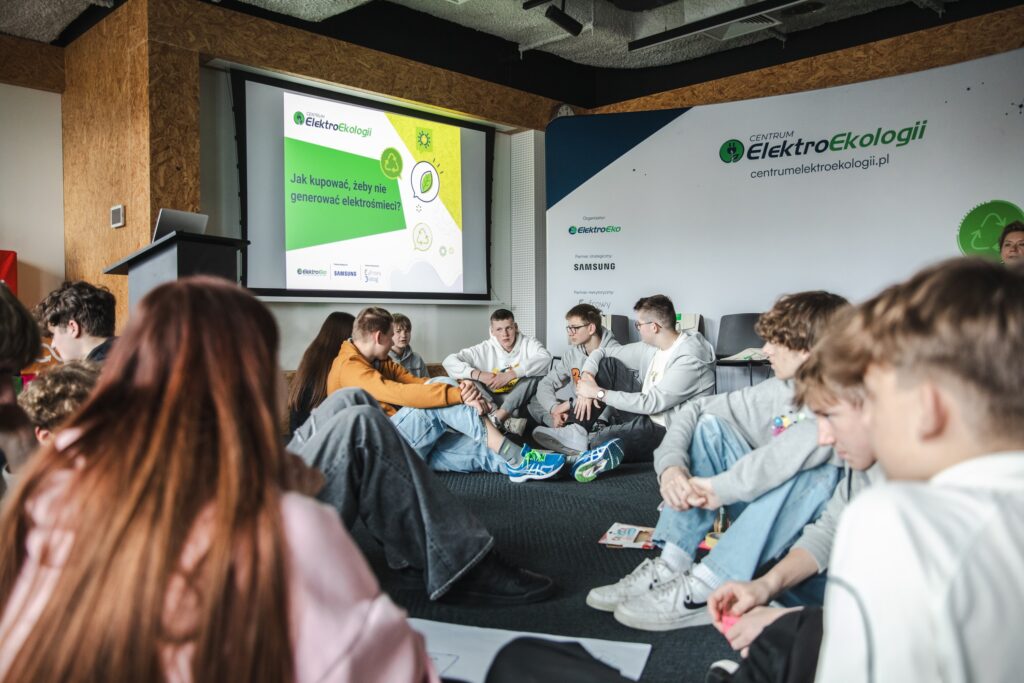
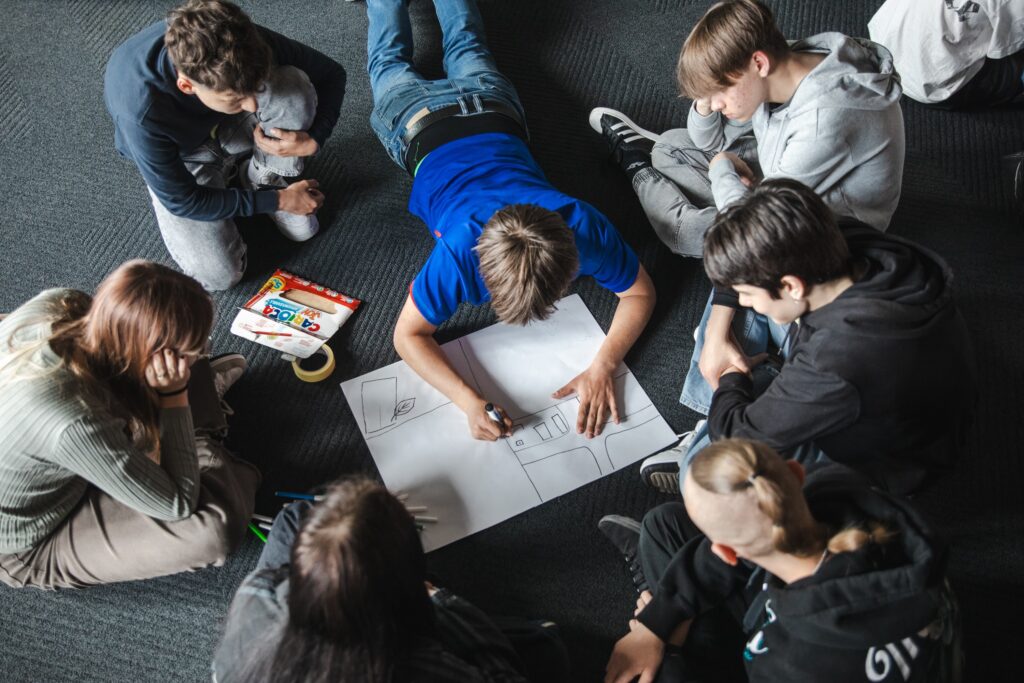
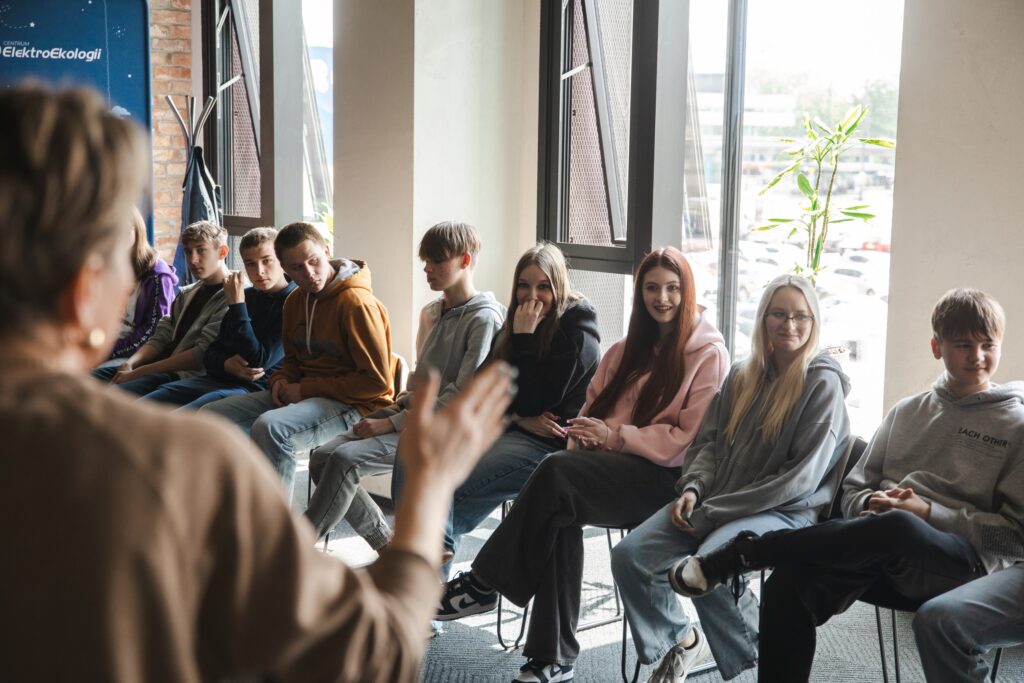
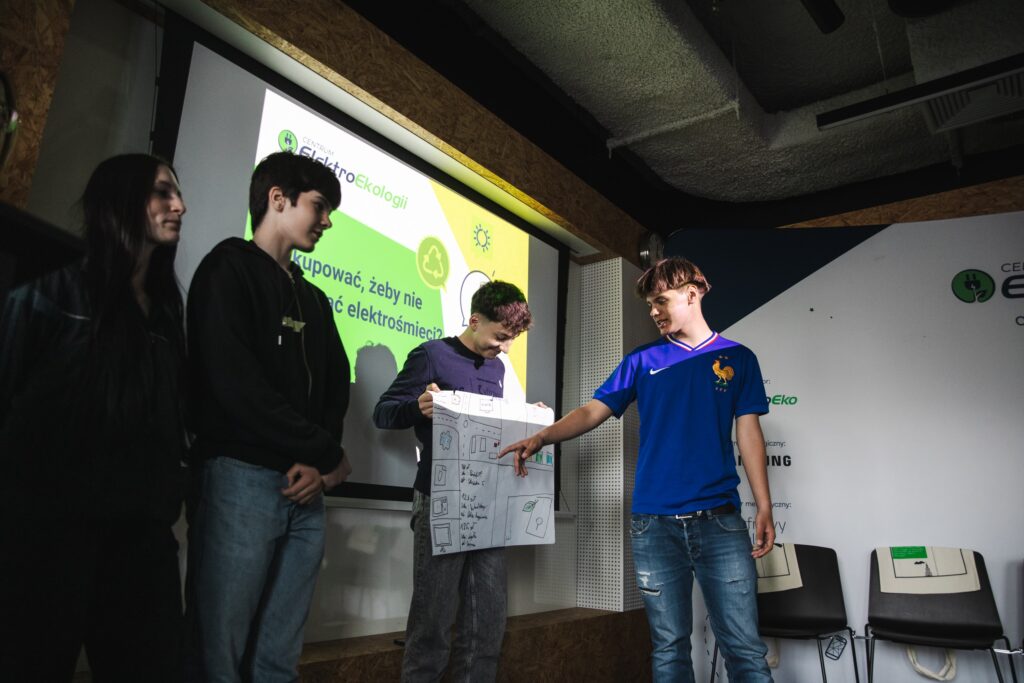
In 2021, ElektroEko opened the Centre for Electro-Ecology (Centrum ElektroEkologii) in Warsaw – the first facility in Europe dedicated entirely to education on e-waste and electro-ecology. Instead of posters and lectures, the Centre runs hands-on workshops where students aged 12–18 work directly with devices, components and recovered raw materials. The model is built on three principles: interactive learning, teacher empowerment through ready-to-use lesson scenarios, and a nationwide reach that goes far beyond the capital.
“E-waste is not only an environmental problem – it is a strategic resource we cannot afford to waste. Every phone, computer or fridge contains valuable materials that, with proper collection and recycling, can return to the economy. That is why we invest so consistently in education. The Centre for Electro-Ecology teaches young people that responsible use of devices begins with everyday decisions and ends with consciously handing equipment over to collection points. More than 21,000 students who have been through our workshops are, for me, the best proof that the young generation is ready to change habits – their own, their families’ and those of their local communities.”
– Grzegorz Skrzypczak, President of the Management Board, ElektroEko S.A.
Results after four years
By the end of 2025, the Centre had delivered approximately 900 on-site and online workshops and nearly 800 hours of electro-ecological education. More than 21,000 students from over 450 schools have taken part – and 80% of those schools come from outside Warsaw. Teachers across Poland can now use 31 ready-made lesson scenarios, supported by six educational animations, including a 2025 film on urban mining. In partnership with the Copernicus Science Centre, the programme has run over 500 educational trips. Flagship formats – the annual ElektroEkologiczny Hackathon (in 2025, an AI-powered game design challenge) and the nationwide ElectroEcological School contest – turn passive learners into active designers of solutions. A volunteer programme, launched in response to the UN International Year of Volunteers for Sustainable Development 2026, opens a further route for youth engagement.
Scaling nationwide: the Rzeszów branch
Demand from schools outside Warsaw made one thing clear: one Centre is not enough. In October 2025, ElektroEko piloted its first out-of-Warsaw workshops in Rzeszów – the capital of the Podkarpackie region in south-eastern Poland – together with the City of Rzeszów, Urban Lab and the Podkarpackie Centre for Innovation. The response confirmed the need. On 13 April 2026, at a press conference in Rzeszów City Hall, partners signed a formal cooperation document launching a permanent Centre for Electro-Ecology branch in the city.
The choice of Rzeszów is deliberate and strategic. Podkarpackie is one of the fastest-growing regions in Poland, rapidly closing the gap with central and western parts of the country in industry, education and transport infrastructure. The region hosts Poland’s Aviation Valley cluster, a fast-expanding higher-education base and major logistics investments that have turned the area into a gateway to eastern markets. Its eastern border is the European Union’s external border with Ukraine, which has given the region additional geopolitical and economic weight – as a humanitarian, reconstruction and business hub connecting the EU with Ukraine. Building a modern electro-ecology education centre here means placing circular-economy and WEEE competences exactly where industrial growth, green-transition skills demand and cross-border cooperation meet.
The branch is part of a three-year nationwide educational programme on circular economy and WEEE management, led by UNEP/GRID-Warsaw with a grant of over PLN 5 million. It will serve vocational-school students and teachers from south-eastern Poland, with ElektroEko as organiser, UNEP/GRID-Warsaw and Samsung as strategic partners, the City of Rzeszów as local partner, and Neweconomy as operator.
Why it matters
The Centre for Electro-Ecology is one of several flagship, widely recognised public education campaigns run by ElektroEko alongside the nationwide “My City Without E-waste” school programme, International E-Waste Day (which ElektroEko coordinates in Poland in cooperation with UNEP/GRID-Warsaw and the WEEE Forum), and joint educational projects with SGH Warsaw School of Economics. Over the past two decades, ElektroEko has invested around PLN 58 million in environmental education, without a single złoty of public funding – entirely from fees paid by producers and importers of electrical and electronic equipment. Together, these initiatives show how a PRO can translate producer responsibility into lasting behavioural change – one classroom, and one city, at a time – offering a replicable reference point for WEEE Forum members working on public awareness and circular-economy skills across Europe.
About
The WEEE Forum a.i.s.b.l. is an international association representing 49 producer responsibility organisations across the globe. Together with our members, we are at the forefront of turning the extended producer responsibility principle into an effective electronic waste management policy approach through our combined knowledge of the technical, business and operational aspects of collection, logistics, de-pollution, processing, preparing for reuse and reporting of e-waste. Our mission is to be the world’s foremost e-waste competence centre excelling in the implementation of the circularity principle.
Transparency Register ID 702397445-73.
Copyright 2019-2025 All Rights Reserved
Contact
Legal Address:
Working From_The Hoxton
Sq. Victoria Régina 1
1210 Brussels
Belgium
Newsletter
Subscribe to our mailing list to get the updates to your email inbox.