 01/04/2026
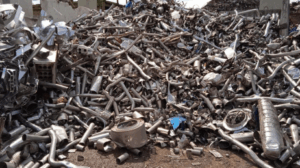
A new issue paper by the WEEE Forum highlights the problem of WEEE being mixed with metal scrap, leading to incorrect reporting and improper treatment. This also enables scavenging, i.e. the illegal removal of valuable components, causing environmental damage, safety risks, and economic losses across the recycling chain.
As for scrap, the magnitude of the issue is difficult to assess due to the lack of data reported, however according to some studies carried out in several countries, around 1.4 Mt (2.7 kg/inhabitant) of WEEE is collected together with metal scrap and not declared as WEEE in on members state level.
As for scavenging, it results in missing compressors from cooling and freezing appliances, copper coils from cathode ray tube displays, motors from large household appliances, and some IT components. It is most common at municipal collection points, while retailer-based collection better protects equipment and reduces opportunities for parts to be removed.
Issues and challenges
More specifically, WEEE mixed with scrap often ends up in facilities that are not authorised to treat it, where it is handled and reported as scrap, which is often worsened by untraceable cash transactions. Because proper sorting and sampling are lacking, data on WEEE in scrap or scavenged components is inconsistent, and PROs cannot access facility information.
Scavenging results in the release of hazardous substances, creates safety risks, and damages equipment, reducing both treatment quality and the value of recovered materials. These unreported and improperly handled flows do not count toward collection or recovery targets. In some Member States, decisions at collection points are driven by economic interests rather than compliance with treatment and reporting rules.
The issues have negative impact on minimum WEEE collection targets attainment in most Member States because large amounts of WEEE go unreported through these parallel waste flows.
Recommendations
To address the issue WEEE Forum recommends measures aimed at improving information collection, making sorting mandatory, ensuring proper reporting and treatment of WEEE mixed with scrap, as well as improving collection infrastructure, and strengthening enforcement, such as:
- banning cash transactions at scrap yards
- regular harmonised sampling campaigns to measure WEEE mixed with scrap carried out by Member States
- requiring treatment operators to sort, record, and report separated WEEE and scavenging rates
- requiring Member States to monitor scavenging trends to identify problem areas
- banning collection of WEEE mixed with scrap
- introducing legally binding treatment standards
- mandatory handover of WEEE to PROs or certified operators
- promotion of retailer-based collection
- requiring Member States to ensure minimum levels of infrastructure and services provided by municipal collection points.
Achieving this requires coordinated action from enforcement bodies, scrap dealers, local authorities, and PROs working together.
About
The WEEE Forum a.i.s.b.l. is an international association representing 49 producer responsibility organisations across the globe. Together with our members, we are at the forefront of turning the extended producer responsibility principle into an effective electronic waste management policy approach through our combined knowledge of the technical, business and operational aspects of collection, logistics, de-pollution, processing, preparing for reuse and reporting of e-waste. Our mission is to be the world’s foremost e-waste competence centre excelling in the implementation of the circularity principle.
Transparency Register ID 702397445-73.
Copyright 2019-2025 All Rights Reserved
Contact
Legal Address:
Working From_The Hoxton
Sq. Victoria Régina 1
1210 Brussels
Belgium
Newsletter
Subscribe to our mailing list to get the updates to your email inbox.